
A faded wall and a peeling windowsill can be on the same house and need very different work. The wall may have lost some color while the coating is still attached. The windowsill may have bare wood or a water problem that needs attention before anyone opens a can of paint.
Start by looking for where the coating has cracked, lifted, or worn through. Those areas tell you more about the work ahead than the age of the paint alone. If you know the house was painted with oil-based paint, share that history with your painter. If you’re unsure, these signs can guide the inspection, but none can identify the paint type by appearance alone.
The Surface Looks Like Alligator Skin
A network of cracks that looks like scales is called alligatoring. Old oil-based paint can develop this pattern as it ages and loses flexibility. It can also happen for other reasons, such as applying a hard coating over a more flexible one.
Notice whether the pattern is limited to one piece of trim or repeats across several boards. That helps a painter decide where to check how deep the cracks go and how much of the old coating can stay. Covering the pattern with another coat leaves the cracked layer underneath.
Paint is Curling or Peeling
Look for curled edges on siding, trim, and sills. Without pulling a chip off, look at what’s visible beneath it. Do you see an older paint color or bare wood? That distinction can help a painter work out whether one coat is separating from another or the coating has lifted from the surface itself. Peeling has several possible causes, including moisture and problems with the previous preparation.
Bubbles Keep Showing Up In the Same Spot
A raised bubble is a blister. Moisture can be involved, but a blister alone doesn’t prove there’s a leak. Tell your painter if the same patch returns after repainting or looks worse after rain. If it sits below a window or near a gutter, take a wider photo so the painter can see what’s above it. The location and timing are often more useful than a close-up alone.
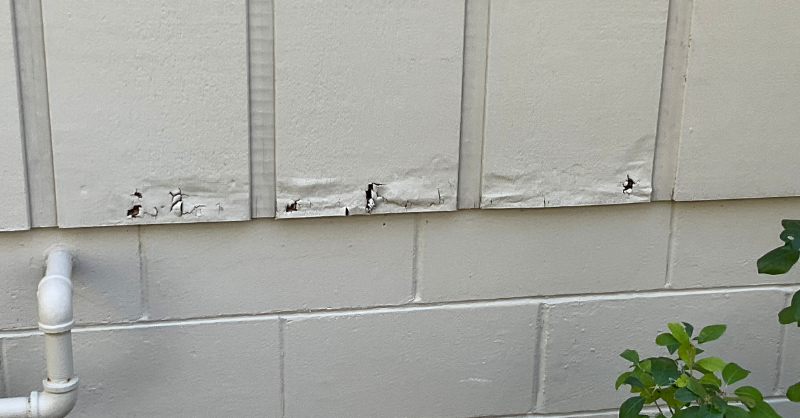
Exterior paint on a home that’s started to bubble
You Can See Bare Wood at Edges or Joints
Start with the lower corners of window trim, the ends of boards, and the bottom course of wood siding. If the paint is gone, ask whether the exposed wood is sound and dry enough to prepare and prime. If it looks soft, split, or deteriorated, find out whether it can be repaired or needs replacement. A paint quote should make clear where carpentry starts and painting resumes.
The Finish Looks Dull or Powdery
Fading is a change in color. Chalking is loose powder that forms as the finish weathers. A wall can show both and still have paint that’s firmly attached. Heavy chalking affects how the wall needs to be cleaned before repainting; it doesn’t, on its own, mean the whole exterior needs to be stripped.
Take a Few Photos Before Asking For a Quote
Walk around the house from ground level and take two photos of each area you’re concerned about: one close enough to show the defect and one wide enough to show where it sits on the wall. Note which side of the house it’s on and whether it’s new, spreading, or recurring. There’s no need to climb a ladder or scrape the coating to collect useful information. If your home was built before 1978, discuss lead-safe preparation before disturbing old paint. EPA recommends hiring a lead-safe certified contractor for renovation work that may disturb lead paint.