
Before painting exterior wood, check that it’s sound, clean, and dry enough for the coating you plan to use. A windowsill that keeps peeling may need a water problem addressed. A sound board with a few bare spots may just need careful prep and spot priming. The two can look similar from the driveway, which is why it pays to look closely before comparing quotes.
Check the Wood and Look for Water Problems
Start with the places that get wet or dry slowly: window sills, lower trim, board ends, and areas below gutters or downspouts. Point out peeling that keeps returning, open joints, or wood that looks swollen, split, or deteriorated. Those clues help a contractor decide whether the job calls for routine prep, a closer look at how water is getting there, or a carpentry repair before painting.
You can make the first visit more useful by sharing when you noticed the problem. If the same sill has peeled after two paint jobs, say so. If you’ve already repaired a gutter or window leak, mention that too. That history helps the contractor decide where to spend time inspecting.
Clean the Surface and Give it Time to Dry
Remove dirt and residue with a cleaning method suited to the wood and its existing finish. Follow the cleaner’s directions for rinsing. If you’re comparing bids, ask how the painter will clean delicate trim or heavily weathered boards; the method that works on one wall may be too aggressive for another.
After washing or rain, wood can look dry on the face before it’s ready to coat. A moisture meter can help a painter check representative spots, including shaded trim and areas with a history of getting wet. Benjamin Moore’s exterior painting guide uses below 15% moisture content as an example for wood. Follow the requirements for the coating you’re actually using rather than applying that number to every job. In Central Illinois, a sunny afternoon doesn’t tell you how dry the shaded side of the house is.
Prepare Loose Paint and Smooth the Transition
On a previously painted board, the old paint that’s firmly attached may be able to stay. Loose paint needs to be addressed. Where the existing finish meets a bare spot, a painter may feather the edge: sand the abrupt paint ridge into a gradual transition so it’s less likely to show through the new finish. Remove sanding dust before coating. On rough-sawn siding, agree on the expected appearance first so the prep preserves the texture you want.
If your home was built before 1978, discuss lead-safe preparation before anyone scrapes or sands old paint. Disturbing lead paint can create hazardous dust, and EPA recommends hiring a lead-safe certified contractor for renovation work on pre-1978 homes.
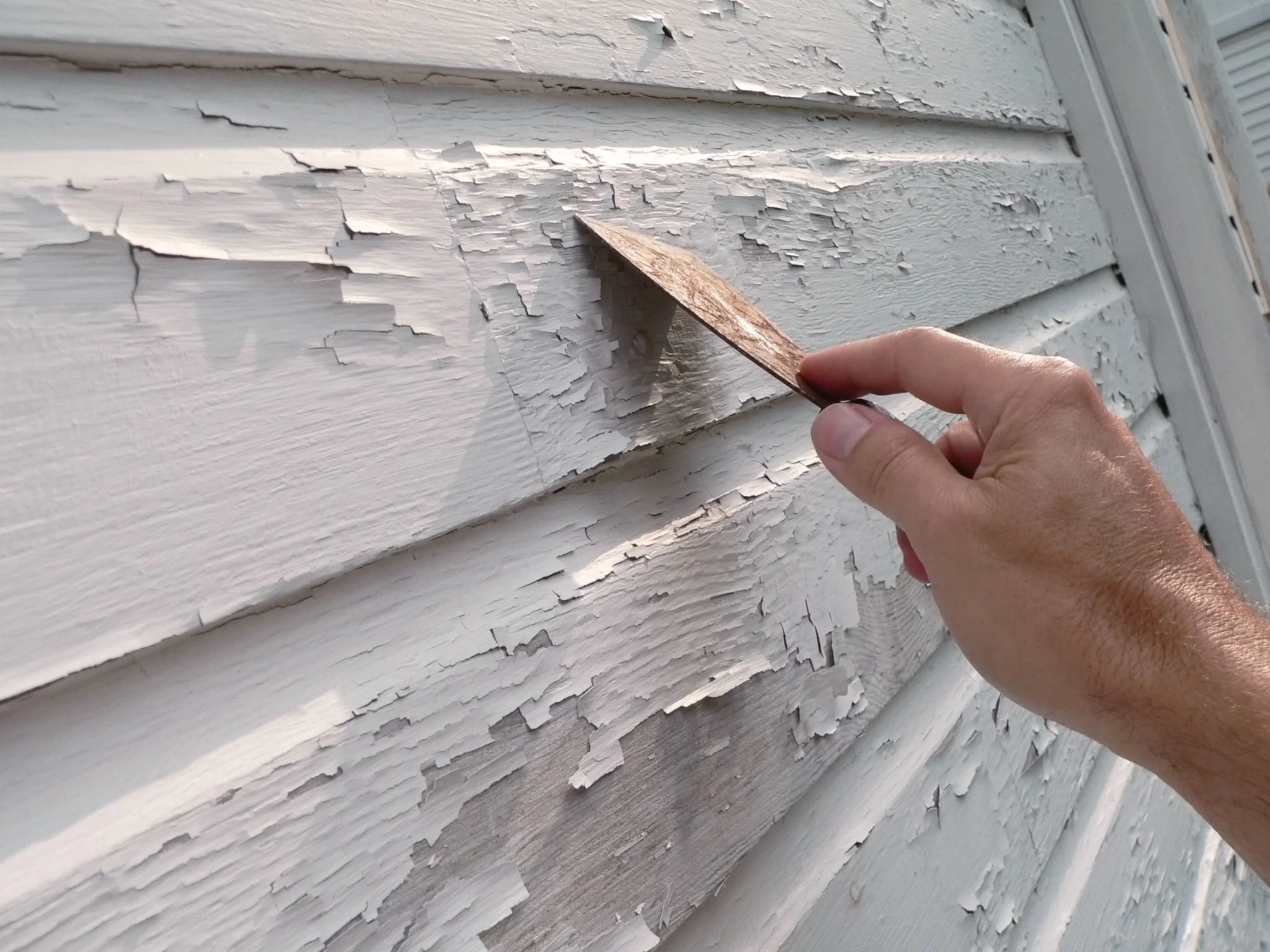
Scraping old paint off of exterior wood — a crucial part of the prepping process.
Match the Primer to What’s Exposed
Ask which areas will be primed and why. A few bare spots on otherwise sound painted trim may call for spot priming under the selected system. Fresh or extensively exposed wood may need a different approach. If you’re seeing reddish-brown staining on cedar, ask whether it could be tannin bleed and whether the proposed primer is designed to address it. A stain-blocking primer can serve a purpose there, but any ongoing moisture problem still needs attention.
Look at the details that are easy to miss: the cut ends of replacement boards and the underside of a sill. Ask how those areas will be treated where accessible and what the coating instructions call for. The face of a board is the easiest part to see from the ground; it’s only part of the job.
What a Good Prep Estimate Should Tell You
Before approving the work, ask the painter to walk you through one representative wall or window. Which wood is sound enough to keep? What will be cleaned, scraped, or sanded? How will they check that the wood is ready to coat? Where does primer go, and how will they handle damage found during prep? Once those details are clear, you can compare estimates based on what each crew will do before the first finish coat.